.png)
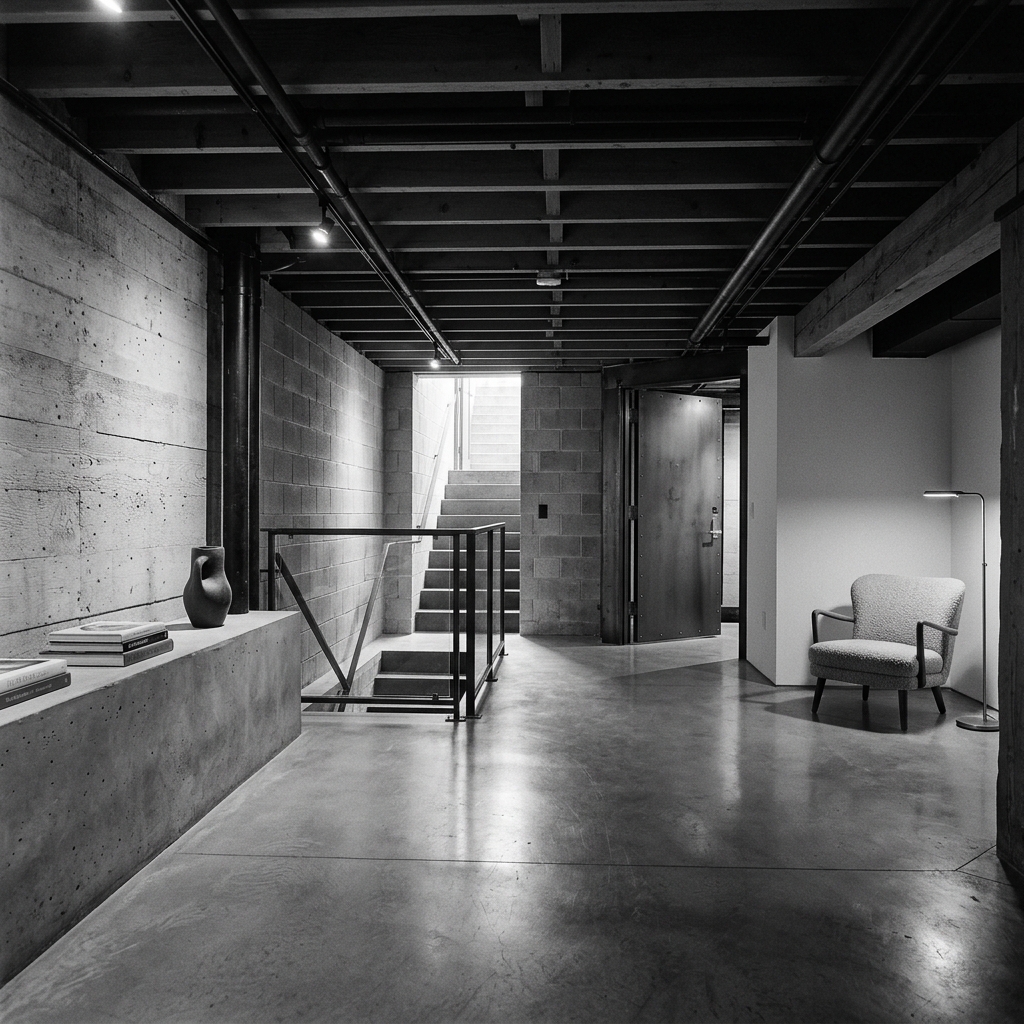
A frequent source of tension and confusion for Portland homeowners undergoing a residential appraisal involves beautifully finished basements, converted garages, or heavily renovated attic spaces. Sellers, real estate agents, and homeowners often assume that any newly carpeted, painted, and heated room adds directly to the home’s Gross Living Area (GLA).
However, professional appraisers do not operate on assumptions. They operate under incredibly strict measurement guidelines—specifically the ANSI (American National Standards Institute) measuring standards—which definitively dictate what constitutes livable square footage for valuation purposes.
The Strict Divide: Below-Grade vs. Above-Grade Space
The most rigid and unforgiving rule in appraisal measurement concerns basements. It does not matter if your basement looks like a luxury penthouse. If any portion of a level rests below the exterior grade (even partially, such as in a standard daylight basement on a sloping Portland lot), the entire level is classified as "below-grade" space.
This means a fully finished, luxury basement with a custom bar, home theater, and heated floors does not count toward the home's total above-grade Gross Living Area.
This does not mean the basement is worthless. It means it is valued differently. The appraiser will assign a specific, distinct value to the finished basement explicitly on a separate line item of the appraisal form. The underlying principle is that buyers, generally speaking, value above-grade space more highly than below-grade space. Combining a 1,000-square-foot main floor with a 1,000-square-foot finished basement to advertise a "2,000-square-foot home" is technically inaccurate from an appraisal standpoint and can fatally flaw a specialized valuation.
The Rigid Ceiling Height Requirements
Attics, loft conversions, and upper bonus rooms face their own strict structural rules. Many of Portland's classic, older homes—such as Cape Cods and traditional bungalows—feature heavily sloped upper ceilings.
Under ANSI standards, in order for an upper space to be included in the official GLA, the finished space must have a minimum ceiling height of 7 feet. In spaces with sloped or pitched ceilings, at least half (50%) of the finished floor area must have a 7-foot clearance to be counted. Furthermore, any area where the ceiling height drops below 5 feet is entirely excluded from the square footage calculation.
An appraiser utilizes precise laser measurements to delineate exactly where the 5-foot clearance cuts off, ensuring the official GLA is mathematically defensible in a court of law.
The Complication of Unpermitted Work
If a homeowner converted a garage into a living room, or fully finished a basement without pulling the legally required municipal permits from the City of Portland, the appraiser must report the space precisely as observed.
While an appraiser is not a code enforcer, unpermitted space presents a severe valuation challenge. When evaluating illegal or unpermitted additions, the appraiser must analyze localized market data to determine exactly how typical buyers in that specific neighborhood react to unpermitted work.
Does the market ignore the lack of permits because the workmanship is clearly to standard? Or does the market heavily discount the property due to the looming liability of safety issues, future municipal fines, or the requirement to completely tear out the drywall for a retroactive inspection?
Often, unpermitted square footage is subjected to a "discount factor." The risk of municipal enforcement and the lack of verified safety codes means unpermitted spaces almost never command the same dollar-per-square-foot premium as fully permitted, legally recognized expansions.
An accurate appraisal relies on objective data and strict adherence to geometric measurement science, preventing the costly legal hurdles that arise from exaggerated square footage.